Showing posts with label Thread. Show all posts

Thursday, June 2, 2011

Jammers

I need to come up with a new way of storing my ever growing collection of Aurifil  thread.  Don't you love how Aurifil sews like butter?  I have tried many types of storage cases and none of them have worked for me.  My father made me a thread holder that has spindles and I can store the thread and bobbin together on it, but it's always getting dusty.  I spent more time trying to get the dust off the thread than I was quilting it seems.

I have tried the Art Bin thread storage boxes and they are o.k., but I have to open the top to look in to see what I have.  Plus the one I have is full and I was too cheap to buy another one at 12 some odd bucks and that is the sale price.  I want to save my money for more thread and fabric.   

Then I remembered someone talking about using the Matchbox/hot wheels strange boxes for thier thread.  I did a quick search online to see what I could find and I came up with a few craft stores that were selling them for $24.  Then I did a little more digging and found some on Ebay $12 plus shipping.  Who whats to pay for shipping when you don't have to.  So more digging and soon I found out that they are called Jammers & amp; made by Plano.  Did a search for that and found a thread talking about the Jammers at their local Wal-mart.  They thought they would be smart and try the storage aisle, but no luck so they wandered over to the toys section of the store and lo and behold they found them with the toy cars.  Then the next person said their Wal-mart doesn't carry them.  Not all stores carry the same thing.

What did I have to loose?  I jumped in the car and went for a drive to my local Wal-Mart and look what I found?

Thread case
The Jammers hold 48 large spools of Aurifil thread and it was only $6.  Score!  I only have enough thread to fill one side right now, but I am sure that will soon change.  There is even room inside to place the matching bobbin.  I can pick it up and see right inside an d not have to pull out thread after thread just to get the right one.  This gives me more time for quilting.

I can already see I need to add a few colors to my collection.  The other day I was looking for a grey thread, to which I don't own any and had to break down and buy another brand. Boo.


If I had owned a color card I would not have bought some of the above colors,  but I have learned my lesson on that.  I now have a color card.  It's great to have one on hand.  I can match my fabric right to the thread and get just what I need.  What you see on the screen is not always what you get. 

Until next time,


Friday, March 19, 2010

Linty Thread: A Quilter's Bane

It seems that Bradi and I had the same idea this week.  We both have talked about thread.  As you will see mine take on a slightly different angle than hers so be sure to check out her blog for more great tip and idea on threads and piecing.

Would you put low-grade gasoline in a Ferrari? If you are using a cheap, low quality thread, you cannot expect your expensive machine to compensate. That is not possible. It cannot make a poor quality thread better. Start with quality thread that is worthy of your machine. It does not make sense to spend $5,000 on a machine and then try to save $1.00 on a budget thread. Poor quality thread breaks easily and can make any sewing project more labor than love.  It is always best to use a good quality thread in your sewing machine as a poor quality thread tends to have a lot of lint associated with it.  Old thread that has been lying around a while can get very brittle and give you lots of problems.  Such as breaking and poor stitch quality.  Spools that were three for a dollars, from the value bin or on a wooden spool are sure to give you problems.  One brand that I like and recommend is Aurifil.  It is made it Italy and yes it does cost a bit more, but it has little to no lint.  This being said, that means you need to clean your machine less often due to less lint getting built up.  When shopping for thread, a good rule of thumb is to pull out a strand of it and take a close look at it.  See if there is any lint on the thread.  Any lint that you see will come off inside your sewing machine.

 A word of advice...Some thread  spools used to have a little notch on one end and the thread would get caught on it and break  To eliminate said problem, use a spool cap that is slightly larger than your spool of thread  This will allow the thread to ride on the spool cap and not the notch.

 As Quilters, we like to use 100% cotton thread in a 40 or 50 weight.  Unfortunately, however, most cotton threads have some lint.  One way to avoid lint in your sewing machine, is when removing the thread, is not to pull it backwards from the needle.  Instead, cut it close to the spool and pull it through the needle.  When you pull it backwards, you release all that lint into the machine.  Thread is meant to travel in one direction. 


QuiltersDaily Blog-AlongMake sure to visit Quilter's Daily about thread and your sewing machine, share your own blog post or any other machine related issue.  If you have any questions about your domestic sewing machine, share those as well.


Don't forget to follow me on Facebook and Twitter!

Until next time,

post signature

Thursday, February 25, 2010

Machine Fridays - Sew, A Needle Pulling Thread

I get asked this question at least once a day, what needle do I need to buy? In turn I ask what type of fabric are you sewing on and what kind of thread are you going to be using?

Sewing machine needles are the cheapest part of your sewing machine. If you have a dual needle it could tear your fabric. Most people just continue to use the needle that came in their machine until it breaks. Needles DO NOT last forever, they should be replaced approximately every four to six hours and at the beginning of every project. Replacing your needle, is the easiest way to improve your stitch quality.

Change your needle when; you have broken or shredded threads, skipped stitches, puckered fabrics, damaged fabric, uneven threads or you sew over a pin or hit a zipper. If you are having trouble with skipping or the needle makes a popping noise (dull or blunted point) as it sews, it is past time to change the needle.

DO NOT sew over pins or zippers. The needle could break and hit you in the eye. Also, it can throw the timing of your sewing machine off, whereupon you would need to take it in for servicing.

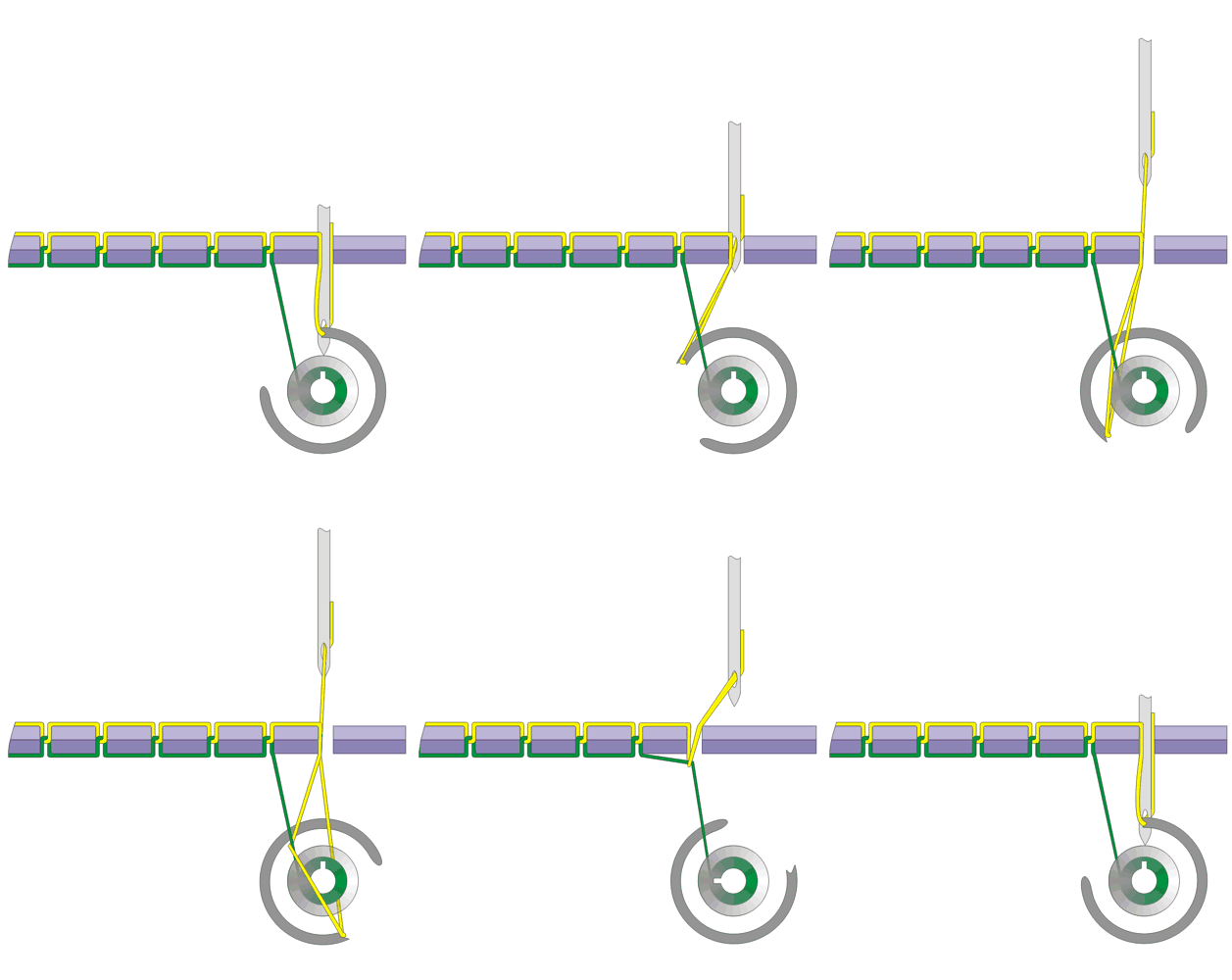
The photo above shows you how a stitch is formed.

The eye of the needle should be 40% larger than the diameter of the thread. When going to a larger size of thread a larger needle should be used. Use the appropriate needle for the type of fabric being sewn. Size 80 needles works great for 40 weight thread, 75 would be great for 50 weight thread. The finer the thread and the finer the fabric that is being sewn, the finer the needle.

If you have any problems with your stitches, try changing your needle. Most people that bring their machine in because of skipped stitches, it's because of the needle and we charge them upwards of $100 and it only costs us $ 0.25.

More Fabric Savvy by Sandra Betzina is a must for every sewer. This book includes 100 different types of fabrics and tells you everything from what type of sewing foot to use, what is the best seam to use for the type of fabric, what needle to use and even the setting of your iron. I like to use it in the shop to help people select the right needle for their project and it helps sell the book.


Until next time,

post signature

Happy Rainy Wedneday

Hello my friends, How is every one?  Below are some projects that I have been working on. This quilt has been on my design wall for ove...